Shoulder to Shoulder
Shoulder to Shoulder
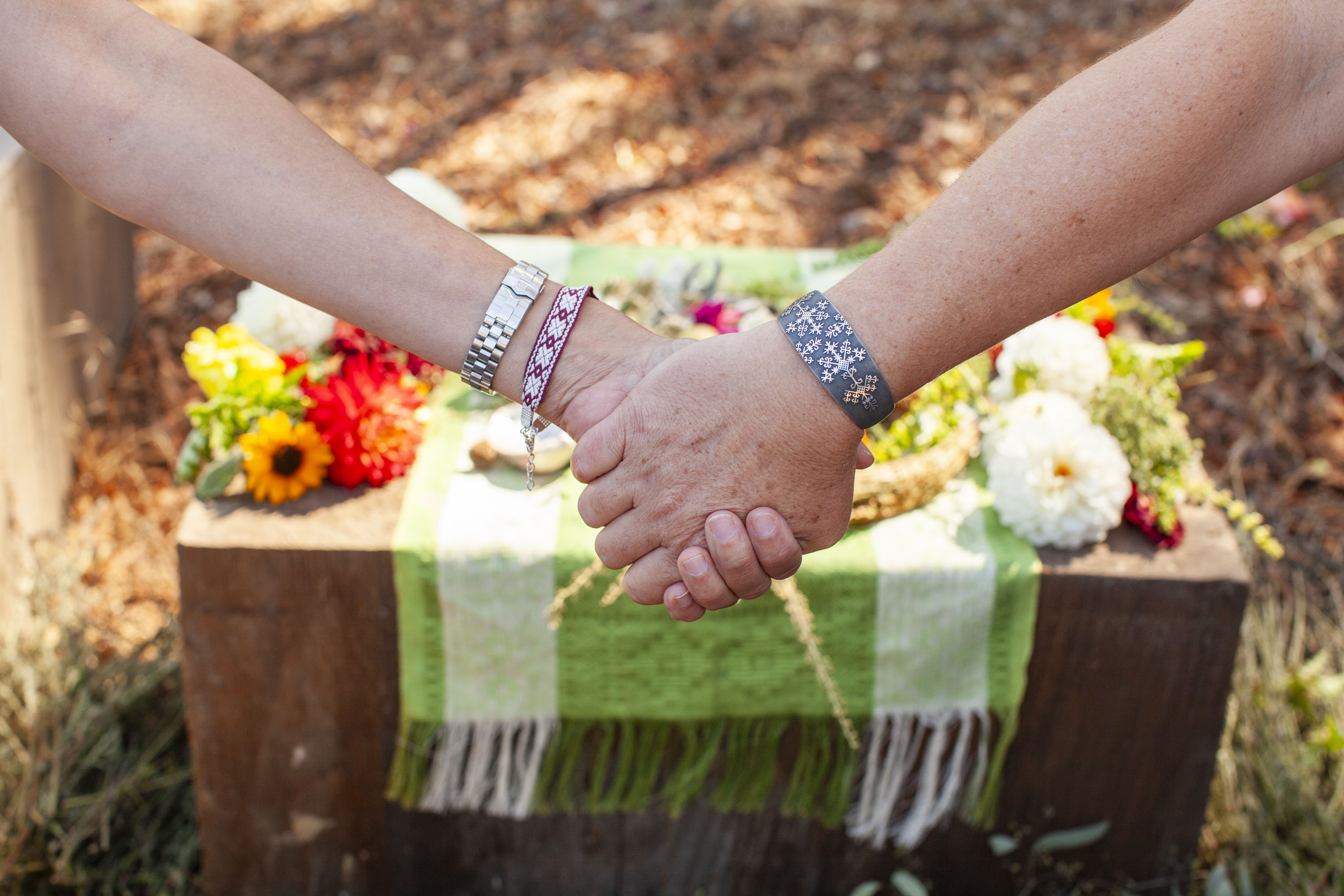
Photo Credit: Michelle Magdalena Maddox
Dear Ones,
There is a phrase I find myself returning to again and again in this season of life and leadership: shoulder to shoulder.
It has been weaving its way into my writing, into my conversations, and into the way I understand what is being asked of us right now—not as individuals striving alone, but as people remembering how to stand together.
I want to share a story that lives in my lineage.
The Latvian experience is one shaped by centuries of occupation—over 800 years of external control—until independence was restored in a sustained way in 1991. Within that long arc of endurance, there are moments of extraordinary clarity about who we are when we choose one another.
One of those moments is the Baltic Way.
On August 23, 1989, approximately two million people joined hands across Latvia, Lithuania, and Estonia, forming a human chain that stretched over 400 miles. That represented roughly a quarter of the population of these three nations.
They stood together—literally shoulder to shoulder—in peaceful resistance to decades of Soviet occupation.
When I hold that image, I do not just see a protest. I see a teaching.
No one above. No one below. No one more important. No one less.
A collective decision to stand in unity.
What often gets remembered are these visible, powerful moments—the line of people, the photographs, the scale. But what I find myself drawn to is everything that came before.
The quiet work.
The patient coordination across three nations.
The humility required to move not as separate entities, but as one. To wait for each other. To align on timing, method, and message.
That kind of unity does not happen quickly. It is built through careful listening, shared purpose, and a willingness to place the collective need above individual urgency.
And even before that, there was the deeper foundation: culture.
The Baltic peoples carried forward their strength through song—through the singing revolution, through dainas, through the preservation of language, story, and identity. Cultural practice was not separate from resistance; it was the resistance. It built the resilience necessary for a moment like the Baltic Way to even be possible.
So when I speak about being shoulder to shoulder, I am speaking about more than proximity. I am speaking about a set of values that we are being invited to remember and practice.
Humility.
No single person carries more value than another. The work asks us to decenter ourselves in service of something larger.
Cultural grounding.
Our practices—our songs, our rituals, our ways of being—are not decorative. They are the roots that hold us steady in times of uncertainty.
Shared power.
When we sit in circle, shoulder to shoulder, we are making a commitment: we go together, or we do not go at all. We take the time to find common ground before we act.
From a matriarchal perspective, this also means designing our spaces with intention—so that the full range of human wisdom can emerge. Elders are supported in speaking. Youth are listened to. Every voice is considered, not as a formality, but as a necessary ingredient in arriving at the right next step.
When I think about what it took to mobilize two million people—many of whom had experienced poverty, displacement, loss of land, forced labor, exile, and the violence of occupation—I understand that this was not just a political act. It was a deeply human one.
It was an act of remembering.
So what does this ask of us now?
It asks us to look for the places where we can begin again.
Even within systems built on hierarchy, separation, and power-over, there are openings. Small ones, sometimes. But real.
At the dinner table, when a family must make a decision together.
In a grassroots movement finding its voice.
Inside organizations, nonprofits, businesses, and government spaces where the old ways no longer serve.
Each of us holds some degree of influence—whether given or assumed. And with that comes the opportunity to shift how we gather. To move from hierarchy into circle. To create conditions where people can stand—not in competition—but in relationship.
If we are to thrive as a human family, we must relearn how to stand shoulder to shoulder.
Not perfectly. Not all at once.
But with intention.
I am here, standing in the circle.
Waiting for you.
Come join me.
— Maija
🌿 Matriarch Makeover
(Shared with permission)